

NYSC Camp Allowance: What Corps Members Should Know
The National Youth Service Corps remains one of Nigeria’s most important civic institutions. For every new batch, the first three weeks at orientation camp set the tone for the rest of the service year.
New corps members often have practical questions: How much will I be paid? When will the money arrive? What is free in camp? What additional support can a state or Place of Primary Assignment (PPA) provide?
This article explains how the NYSC camp allowance and related payments work, using the federal rate in force through 2026 and the payment practices described in the source material.
The short version is this: the Federal Government pays every serving corps member a monthly allowance of ₦77,000.
Camp itself provides free accommodation, three official meals a day and access to a clinic. Separate one-off entitlements, such as transport and bicycle allowances, are processed after registration.
Anything beyond the federal ₦77,000, including state stipends, local-government grants or PPA support, is additional and should be verified locally.
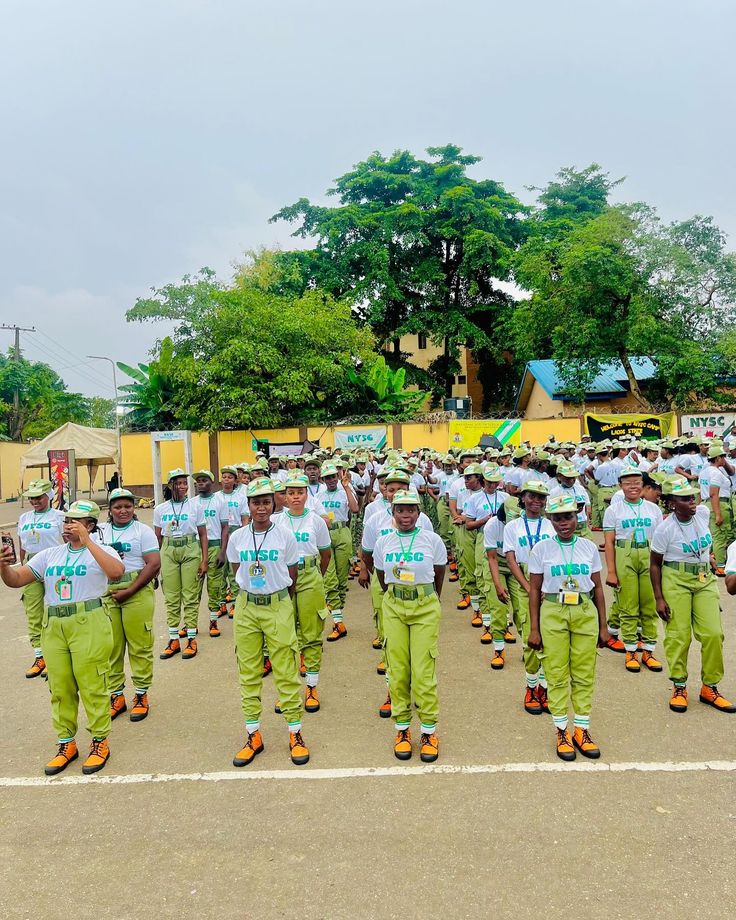
What “Camp Allowance” Really Means
Corps members often use “camp allowance” and “allawee” interchangeably, but they are not exactly the same.
Allawee is the monthly federal stipend paid throughout the service year.
Camp allowance, in everyday usage, generally refers to the money and in-kind support associated with the three-week orientation period, including feeding, accommodation, the first monthly credit and smaller one-off payments captured during camp registration.
Orientation typically lasts 21 days.
Feeding and hostel accommodation are provided by NYSC at no additional charge. However, many corps members still spend personal money at the mammy market because the quality and quantity of official meals can vary from camp to camp.
That spending is a personal choice and is not an official deduction from the allowance.
Your allowance clock starts from the month your orientation camp begins, rather than from the day you leave camp.
The first bank credit often arrives towards the end of camp or shortly after passing out of orientation because new batches are processed in a queue.
Subsequent payments are usually made between the 25th and 30th of the month, subject to biometric clearance and Community Development Service (CDS) attendance after deployment to the local government.
The Federal Monthly Allowance
How the ₦77,000 Figure Is Calculated
The NYSC stipend is linked to the national minimum wage plus 10 per cent.
When the minimum wage was ₦30,000, the NYSC allowance was ₦33,000.
After the 2024 amendment set the minimum wage at ₦70,000, the corps rate became ₦77,000.
Payments at the new rate began in March 2025 and remained the federal rate in 2026.
The allowance history outlined in the source is:
- Before 2019: ₦19,800.
- 2019 to early 2025: ₦33,000.
- March 2025 to 2026: ₦77,000.
The stated legal basis was the applicable minimum wage plus 10 per cent.
Who Pays the ₦77,000?
The Federal Government pays the ₦77,000 monthly allowance.
Your PPA does not replace it. Even if a private employer provides no additional payment, you remain entitled to the federal stipend for the duration of service, provided you meet the relevant NYSC clearance conditions.
The money is transferred into the Nigerian bank account registered during mobilisation and confirmed at camp. Cash collection at NYSC offices is not the standard payment method.
The federal amount is the same regardless of course of study, degree classification or state of deployment.
Differences in total take-home pay come from state top-ups, local-government grants and PPA stipends.
Other Official Entitlements Captured in Camp
Camp registration is also when NYSC captures information needed for smaller, often one-off payments.
Exact figures can vary according to the applicable circular and batch, but the categories include:
- Transport allowance to and from camp.
- Bicycle allowance, a one-off payment processed after camp to support local movement at the PPA.
- Local transport or redeployment-related stipends where applicable.
- Free accommodation in camp hostels throughout the orientation period.
- Free official feeding, including breakfast, lunch and dinner.
- Access to the camp clinic for malaria, heat-related illness and minor injuries.
The source also notes that Lagos State NYSC, among other secretariats, has publicly reminded batches that transport and bicycle allowances are separate from the monthly stipend.
Corps members should keep the same active bank account in their own name, linked to their BVN, and check the NYSC portal after registration to ensure that account information is correct.
When and How NYSC Payment Is Made
Monthly credits are typically processed during the last week of the month.
The first payment after camp is more likely to be delayed because the batch must be fully captured on the Management Information System.
After leaving camp, two important conditions affect continued payment:
- Regular participation in CDS activities.
- Monthly biometric clearance at the Local Government Inspector’s office.
Failure to complete biometric clearance can result in a missed month’s allowance.
The source notes that waivers may exist for maternity leave and documented illness where the Local Government Inspector is informed in time.
If a month is missed, the usual remedy is to apply through the LGI or Zonal Inspector for repayment.
Keep your portal profile accurate. A wrong account number, inactive account or mismatch between your name and BVN can delay a first payment.
State Allowances and Other Top-Ups
State “allawee” is optional.
Some governors pay a monthly stipend to all corps members in the state. Others pay only corps members serving in public schools, ministries or hospitals. Some states may provide support in other forms rather than cash, while others may provide nothing extra.
A state that pays one year may reduce or pause the payment the next year, so corps members should verify the current position locally.
The source lists the following reported 2025–2026 examples:
- Adamawa: about ₦30,000 per month. The source says this increased from ₦20,000 in 2025.
- Ebonyi: about ₦30,000 per month, reportedly announced at the 2026 Batch B Stream II swearing-in.
- Akwa Ibom: about ₦20,000 per month at state level.
- Selected Akwa Ibom LGAs: about ₦20,000 per month, with Urue-Offong/Oruko cited as an example.
- Benue: about ₦15,000 per month based on a 2026 state announcement.
- Zamfara teachers: about ₦20,000 per month for corps members posted to schools.
- Zamfara medical doctors: about ₦150,000 per month for the special category described in the source.
- Many other states: ₦0 or irregular payments, with some states providing support in kind instead.
These figures should be reconfirmed with the relevant State Secretariat because state payments can change.
PPA Support
PPA support is another possible source of additional income or benefits.
Banks, oil-service companies, large hospitals and some private schools may provide monthly stipends, staff transport, staff meals or accommodation.
Public primary schools in low-income areas may provide little or no additional support.
Medical and other professional postings can attract higher combined packages than classroom postings.
None of these payments replaces the federal ₦77,000 allowance.
What Camp Life Actually Costs
Official feeding is free, but mammy-market spending is a major reason some corps members run out of money during the second week of camp.
The source estimates that extra food spending in 2026 can be around ₦1,500 to ₦3,000 per day for corps members who regularly buy food outside the official mess.
A conservative three-week food top-up is estimated at ₦15,000–₦20,000, while a more comfortable budget can reach ₦40,000–₦50,000.
Other expenses can include:
- Toiletries.
- Sewing or adjustment of kits.
- Phone data.
- Photocopying documents.
- Small parade-ground purchases.
- Transport to and from camp.
Because the first allowance may not arrive immediately, corps members are advised to travel to camp with enough personal funds to cover three weeks of extras as well as their journey home if necessary.
Do not assume that your first payment will arrive immediately.
The source also recommends keeping some cash and a working debit card because network outages can occur at remote camps.
For the three-week orientation period, the source gives these broad cost expectations:
- Official meals and hostel: ₦0 because they are provided by NYSC.
- Mammy-market food: roughly ₦25,000–₦35,000 depending on appetite and camp.
- Toiletries and kit adjustments: roughly ₦5,000–₦15,000.
- Data, photocopies and small items: roughly ₦5,000–₦10,000.
- Travel to camp: varies widely and may initially be paid personally, although a refund category exists.
How to Protect Your First Payment
Most payment problems are administrative, so it is important to check your information carefully.
Before and during camp:
- Register a personal Nigerian bank account in your legal name, with BVN and NIN information properly aligned.
- Enter your account number carefully during camp MIS capture and verify it before submitting.
- Print and keep extra copies of your call-up letter, Green Card, credentials and medical fitness certificate.
- Complete camp registration within the official registration window.
- After camp, locate your LGI and find out when biometric clearance begins.
- Attend CDS regularly.
- If a month’s payment is missing, report through the LGI or Zonal Inspector rather than waiting indefinitely.
Social-media claims about sudden changes to the federal rate should not be treated as official until NYSC or the supervising ministry publishes the change.
The ₦77,000 rate is the federal rate stated in the source for 2026.
Budgeting for the Service Year, Not Just Camp
Camp lasts three weeks, but the service year lasts twelve months.
A useful budget should therefore be based on what you can realistically sustain after deployment.
Start with the ₦77,000 federal allowance and add only money you have already received or that your LGI confirms is being paid during the current cycle.
Rent in many state capitals can consume a significant part of the federal stipend if you live alone.
Sharing accommodation with other corps members, eating at a PPA canteen where available and using staff transport can help reduce costs.
A practical way to organise your money is into three broad categories:
Non-negotiable: Rent, staple food, data, transport to your PPA and CDS.
Buffer: Medical expenses, family support and replacement of kits or essential items.
Optional: Skills courses, side-hustle capital and travel.
If a state top-up or PPA stipend becomes available, consider directing the additional money towards your buffer or optional expenses first.
Avoid increasing your fixed expenses immediately after a governor announces a stipend because announcements may come before actual payments begin.
Reforms on the Horizon
In 2026, the Federal Executive Council approved a wider NYSC overhaul.
Public briefings have mentioned a longer orientation programme, discussed as six weeks in three phases instead of the current three weeks, as well as skills-based primary assignments, civilian operational leadership with the military retaining security responsibility and a national grading system for camps.
Until NYSC issues a batch-specific circular, prospective and serving corps members should plan around the existing 21-day orientation period and ₦77,000 federal allowance.
Policy announcements should not be treated as implemented camp calendars until official instructions are issued.
Practical Takeaways
From call-up to passing-out, corps members should keep these points in mind:
- The federal NYSC allowance in 2026 is ₦77,000 per month, paid into the registered account.
- Camp feeding and accommodation are free, but mammy-market food is not.
- The first payment can be delayed, so travel with a personal financial buffer.
- State and PPA payments are additional, uneven and sometimes delayed. Verify them locally.
- Biometric clearance and CDS attendance are important for maintaining payment records.
- Incorrect bank details can delay payment, so correct them early.
- Use official channels such as
portal.nysc.org.ng,nysc.gov.ng, your State Secretariat and LGI instead of relying on forwarded flyers.
NYSC camp is the point at which many of the administrative arrangements for the service year are established. Arriving with enough personal funds, checking your bank details carefully, completing your registration and understanding your clearance obligations can help prevent avoidable payment problems later in the service year.
Disclaimer: Allowance rates, state top-ups and camp calendars can change. The figures in this article reflect the positions and reports stated in the source material as of September 2026 and are not a substitute for a current NYSC circular. Always confirm with the NYSC portal, your State Secretariat and your Local Government Inspector before budgeting or travelling.