

Safety Tips for NYSC PCMs During Their Service Year
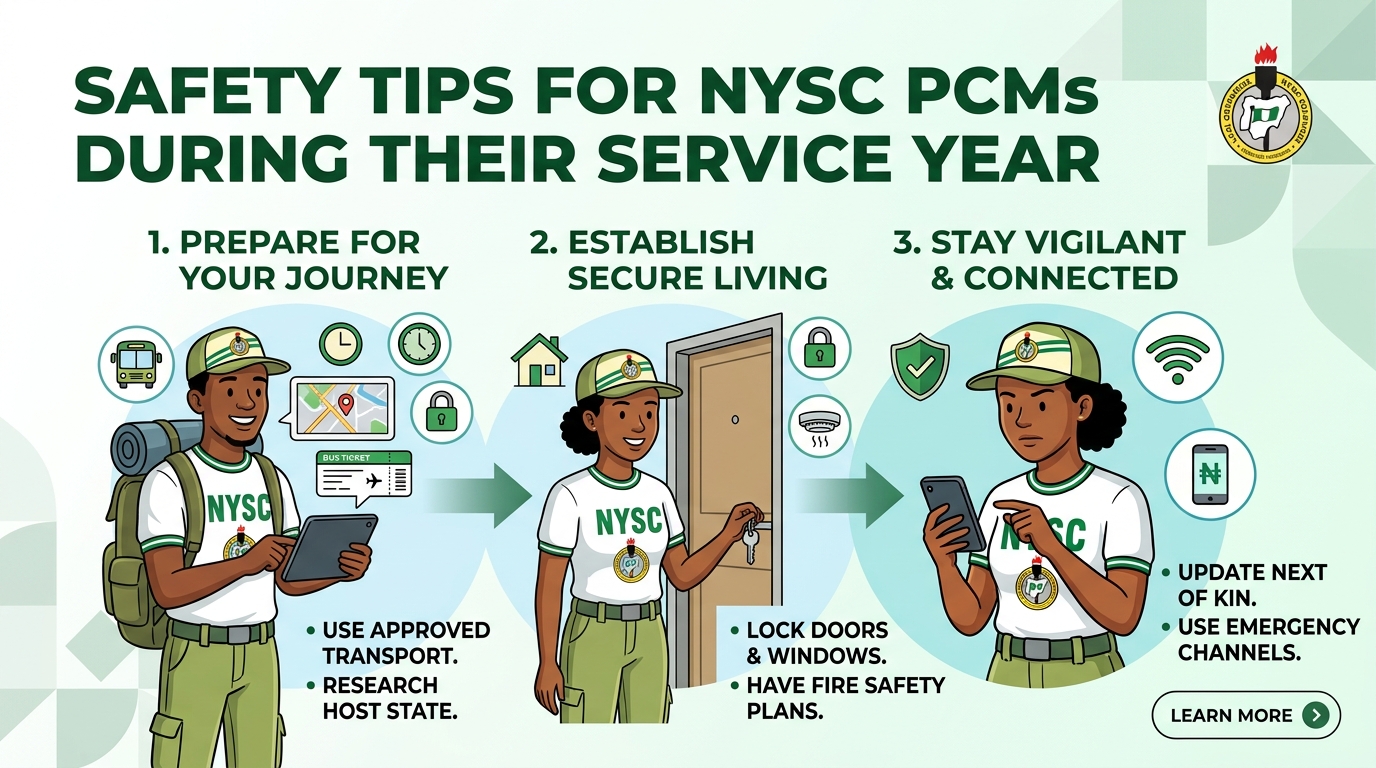
Personal safety is an important concern for Prospective Corps Members (PCMs) and serving corps members, especially those posted far from home. Finding secure accommodation, travelling safely, adjusting to unfamiliar communities, and knowing what to do during an emergency are all essential parts of a successful National Youth Service Corps (NYSC) year.
Although NYSC orientation camps and state secretariats have procedures for corps members’ welfare and security, available support can vary by location. Personal vigilance, reliable information, and good communication with trusted people remain essential.
Whether you are preparing for orientation camp or have already been posted to a Place of Primary Assignment (PPA), these practical safety tips can help you reduce avoidable risks and navigate your service year more confidently.
Also read this What Corps Members Should Know about NYSC Camp Allowance
Safety Arrangements for Corps Members
NYSC has established administrative and welfare structures to support corps members during their service year. The specific arrangements available may differ from one state, camp, or PPA to another.
- Orientation and security briefings: Pay attention to official camp announcements, security instructions, emergency procedures, and guidance on reporting incidents.
- Camp security: Follow camp access rules and instructions from authorised officials. Do not assume that every camp has identical security arrangements.
- PPA and community support: Identify your PPA supervisor, Local Government Inspector (LGI), and other appropriate NYSC contacts. Ask them for guidance on local safety concerns.
- Medical support: Find out where the camp clinic or nearest suitable health facility is located and understand the procedure for getting help during a medical emergency.
- Reporting channels: Keep the contact details of your NYSC officials, state secretariat, and relevant emergency services. Confirm which reporting channels are available in your location.
- Welfare support: Ask NYSC officials about any applicable welfare assistance or emergency support. Do not assume that insurance or financial assistance is automatically available in every state.
Safety Protocols in Orientation Camp
Orientation camp can be busy and unfamiliar, making it important to follow instructions and protect your belongings.
- Observe access rules: Follow camp entry and exit procedures. Do not help unauthorised visitors gain access to restricted areas.
- Keep your identification safe: Protect your call-up letter, identity card, and other important documents. Carry identification when required by camp officials.
- Follow movement restrictions: Observe curfews and camp rules. Obtain the necessary permission before leaving camp where required.
- Secure your belongings: Use available locks, keep valuables out of sight, and avoid leaving phones, cash, or documents unattended.
- Practise fire safety: Know the nearest exits, avoid unsafe cooking or the use of unauthorised heating appliances in dormitories, and report faulty electrical wiring.
- Maintain good hygiene: Use safe drinking water, wash your hands regularly, keep your sleeping area clean, and seek medical attention when you feel unwell.
- Avoid scams: Be cautious of anyone demanding money in exchange for preferential treatment, a posting, a redeployment, or an exemption. Verify official procedures through NYSC channels.
- Respect camp regulations: Follow instructions concerning visitors, gatherings, conduct, and other camp activities. Report serious safety concerns to the appropriate officials.
Safety Guidelines for Travelling Corps Members
Travel between your home, orientation camp, PPA, and other destinations requires planning, particularly when you are unfamiliar with the route.
- Plan your journey: Tell a trusted person where you are going, your expected arrival time, and how you intend to travel.
- Choose reputable transport: Use established transport operators and vehicles that appear roadworthy. Avoid suspicious or unmarked vehicles.
- Prefer daytime travel: Where practical, travel during daylight and avoid unnecessary journeys through unfamiliar areas at night.
- Protect your valuables: Keep your phone, cash, identification, and travel documents secure. Avoid displaying large amounts of money in public.
- Keep travel information: Retain your ticket or booking details and share your journey information with someone you trust.
- Limit public disclosure: Avoid posting live travel plans, accommodation details, or information that reveals you are alone to a wide audience on social media.
- Save emergency contacts: Store useful numbers on your phone and keep essential contacts written down in case your phone battery runs out.
- Respond carefully to threats: Prioritise your life and immediate safety. Avoid escalating a confrontation, and report the incident to the appropriate authorities when it is safe to do so.
Staying Safe When Posted to an Unfamiliar State
A new posting may mean adjusting to a different language, culture, environment, or security situation. Take time to understand your surroundings before making major decisions.
- Build a trusted support network: Get to know reliable colleagues, your PPA supervisor, NYSC officials, and responsible community members.
- Learn about your environment: Ask trusted local contacts about safe routes, areas to avoid, transport options, and local customs.
- Keep a low profile: Avoid unnecessary displays of wealth, expensive jewellery, or large amounts of cash.
- Check accommodation carefully: Before committing to a place, assess its locks, doors, lighting, surroundings, access routes, and general security. Consider how you would leave safely during an emergency.
- Stay in regular contact: Agree on a check-in routine with a trusted friend or family member, particularly when travelling or moving into new accommodation.
- Take health precautions: Identify nearby health facilities, keep essential supplies, and seek advice from a qualified health professional about vaccinations or malaria prevention appropriate to your circumstances.
- Protect your finances: Use trusted banking channels, secure your payment details, and avoid suspicious links, investment offers, or requests for banking codes.
- Avoid unnecessary conflict: Stay away from violent confrontations, communal disputes, and gatherings that become unsafe. Follow credible local safety instructions.
- Look after your mental well-being: Being far from home can be stressful. Maintain contact with supportive people and seek help from appropriate health professionals or available welfare services when needed.
Other Practical Safety Tips for Corps Members
A few additional precautions can make it easier to respond to everyday problems and unexpected emergencies.
- Prepare a basic emergency kit: Consider carrying a flashlight, a charged power bank, essential personal medication, basic first-aid supplies, and copies of important documents. Use medication only as directed and seek professional care when necessary.
- Practise digital safety: Use strong passwords, enable two-factor authentication, and avoid conducting sensitive transactions on untrusted public Wi-Fi networks.
- Use transport services carefully: Where ride-hailing services are available, verify the driver and vehicle details, share trip information where possible, and remain aware of your surroundings.
- Keep document backups: Store secure copies of your identification and relevant NYSC documents. Protect digital copies with strong account security.
- Learn basic first aid: Familiarise yourself with appropriate first-aid procedures and how to contact emergency responders.
- Report persistent safety concerns: Inform your LGI, PPA supervisor, or NYSC state secretariat about threats or unsafe conditions. Explain the situation clearly and ask about the appropriate support or formal procedures, including redeployment where applicable. Approval is not automatic.
- Travel with trusted colleagues when appropriate: Group travel can offer additional support, but everyone should still follow safe travel practices.
- Keep emergency money separate: Maintain a small reserve for unexpected transport, communication, or other urgent needs.
- Respect local customs: Behave respectfully and make reasonable efforts to understand local expectations while maintaining your personal safety and rights.
What to Do When You Feel Unsafe
If you face a threat, suspicious activity, harassment, or an unsafe living or working situation, do not ignore it.
- Move to a safer location if you can do so without increasing the danger.
- Contact the appropriate emergency service or security agency if there is an immediate threat.
- Notify your LGI, PPA supervisor, or another appropriate NYSC official as soon as it is safe.
- Keep a factual record of the incident, including relevant dates, messages, and other evidence, provided that collecting it does not put you at risk.
- Ask for guidance on the formal reporting and welfare procedures available to you.
For current NYSC information, use the official NYSC website and NYSC portal. Confirm emergency numbers and local procedures with the relevant authorities in your state.
Final Advice
Your safety during the NYSC service year depends on a combination of official support, good judgement, preparation, and personal vigilance. Learn the rules, protect your documents and belongings, plan your journeys, build a trusted support network, and speak up when something feels unsafe.
No precaution can eliminate every risk, but sensible decisions and timely reporting can help reduce avoidable danger. Stay informed, look out for fellow corps members, and make your safety a priority throughout your service year.